


Introduction
Hand paralysis after a stroke is one of the major factors that can significantly reduce a person’s quality of life (QOL). Rehabilitation at a clinic is of course essential, but how you make use of your time outside of treatment days can be the key to recovery. One approach that has been gaining attention is electrical stimulation therapy that can be done at home.
In this article, we’ll explain the effects of electrical stimulation, the basic physiology behind it, and recommended devices you can use at home.
1. Effects of Electrical Stimulation for Hand Paralysis
Electrical Stimulation Therapy applies a small electric current to paralyzed muscles or nerves to help promote muscle activity and re-education of the nervous system.
After a stroke, the “pathway” between the brain and muscles becomes weakened. Electrical stimulation helps reinforce this signal and trigger muscle movement, which can:
- Prevent muscle weakness
- Maintain range of motion in the fingers
- Improve sensation
- Promote neuroplasticity (the brain’s ability to rewire itself)
For people who have fewer opportunities to use their hands in daily life, electrical stimulation can serve as a “restart button” for muscle activity.
2. Basic Physiology of Electrical Stimulation
Electrical stimulation sends currents through the skin to muscles and nerves, artificially generating an action potential—the electrical signal that causes nerves and muscles to work.
Normally, movement occurs when signals from the brain travel through nerves to the muscles, but in paralysis, this pathway is partially or completely interrupted. By applying electrical stimulation, the following processes can occur:
- Muscles contract directly, improving blood circulation
- Sensory receptors are stimulated, promoting re-education of the central nervous system
- Repeated stimulation encourages neural pathway reconstruction
This is not just simple muscle training—it’s about “reconnecting” the brain and muscles, which is a key rehabilitative effect.
3. Recommended Home Device – Omron Low-Frequency Therapy Device HV-F021-W (Home EMS)
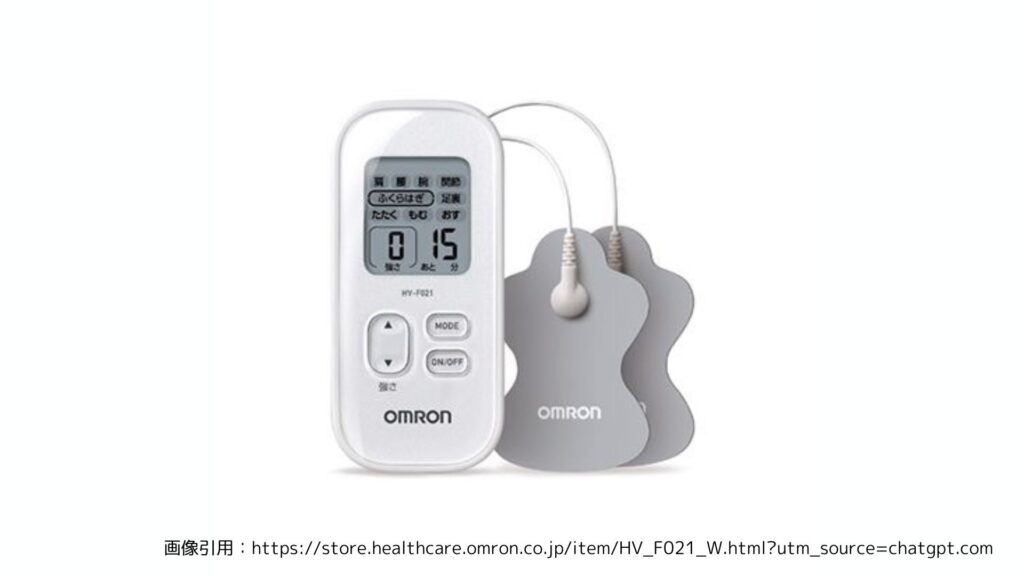
To reduce the time and cost burden of rehabilitation, more people are turning to home-use electrical stimulation devices.
One recommended option is the Omron Low-Frequency Therapy Device HV-F021-W, which is lightweight, portable, and easy to operate—making it well-suited for post-stroke home rehab.
- Features
- Compact design for easy handling
- Comfortable low-frequency stimulation
- Simple adjustment of intensity and modes
- Suitable for multiple areas such as hands, forearms, and shoulders
When using this device, follow the guidance of your physician or rehabilitation professional. Pay attention to skin condition and stimulation intensity, as the paralyzed side often has reduced sensation, increasing the risk of burns or over-stimulation.
In conclusion
Improving hand function after a stroke requires not only hospital or clinic-based rehabilitation but also active self-training at home. Electrical stimulation therapy is a valuable support option in this process.
When used appropriately, it can make your hands easier to use in everyday life, ultimately improving your quality of life. At our clinic, we also provide advice on how to incorporate electrical stimulation into your rehabilitation program and choose the right device—feel free to contact us.
#Kyoto #KyotoOsteopathyCenter #Osteopathy #Chiropractic #Pain
#Numbness #Paralysis #Posture #Walking #LowFrequencyTherapyDeviceHVF021W #HomeEMS #ElectricalStimulation #Stroke #HomeRehab #HandRehab
ブログを書いたスタッフ

大村 颯太
〜薬に頼りすぎない人生を共に創る〜 理論に固執しすぎず、結果にこだわる柔軟な施術家を目指しています。 ・理学療法士 ・健康科学修士 ・JEFPA認定足育アドバイザー ・発達ケア・アドバイザー ~Let's create a life together that doesn't rely too much on medication~ I aim to be a flexible therapist who focuses on results and doesn't get too hung up on theory. ・Physiotherapist ・Master of Health Science ・JEFPA certified foot care advisor ・developmental care advisor
大村 颯太のブログ一覧